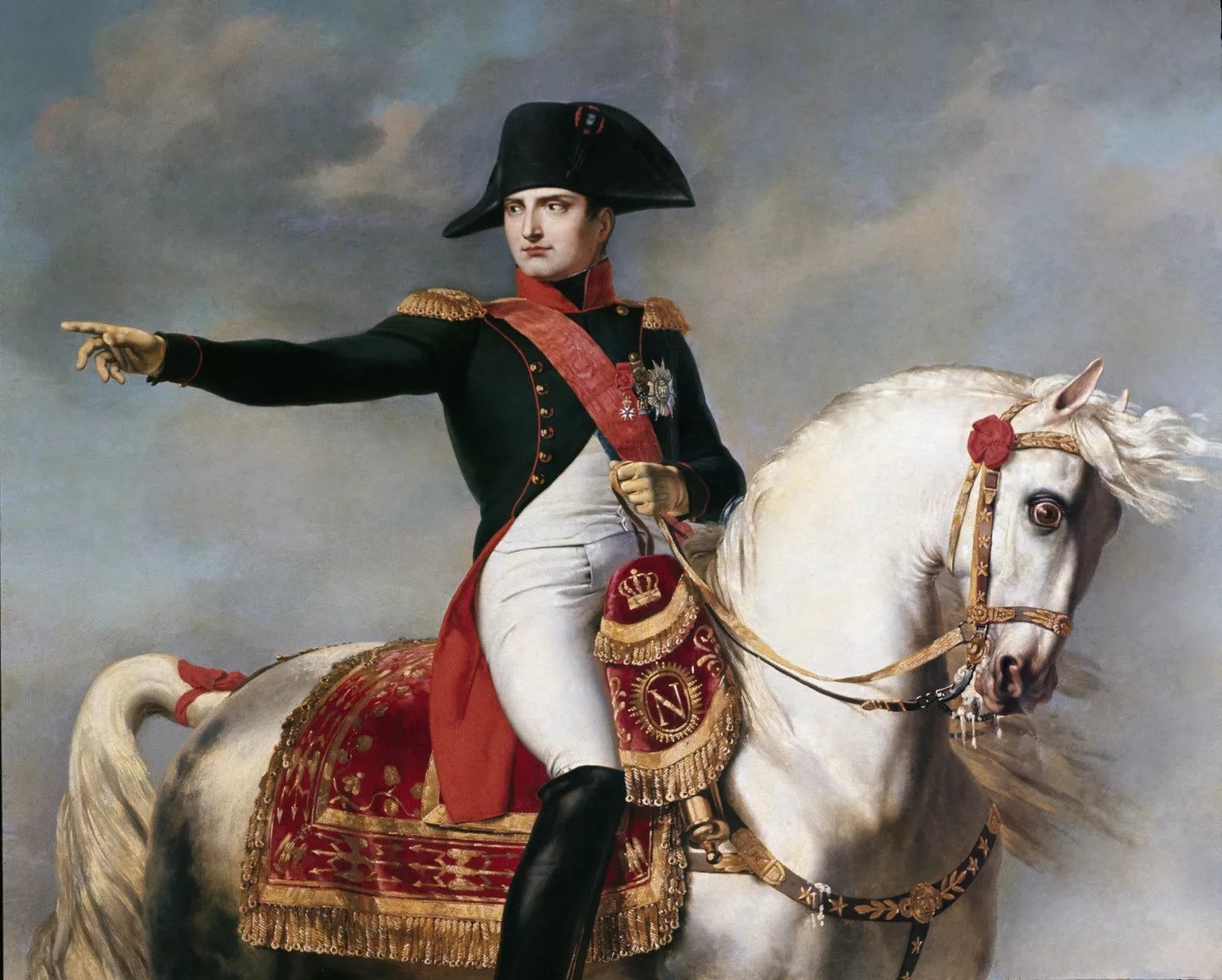
In 1812, Napoleon Bonaparte, the self-crowned Emperor of the French, was the most powerful man in Europe. He had built an empire that stretched from the Atlantic to the borders of Russia, and his military record was practically unmatched. From Austerlitz to Jena, from Wagram to Friedland, Napoleon had crushed every major European power. His military tactics were considered revolutionary. His enemies were in awe—or in ruins.
So when he set his sights on Russia, most observers expected another swift and decisive victory. The Grande Armée, with over 600,000 men from across Europe, was the largest fighting force the world had ever seen. Russia, backward and isolated by comparison, seemed ill-prepared to resist.
And yet, less than six months after crossing the Niemen River into Russian territory, Napoleon’s campaign was in tatters. His army was decimated. His reputation was tarnished. What was meant to be a short war to punish Russian defiance became one of the greatest military disasters in history.
But why did this happen? Why did Napoleon—a man who so often outmaneuvered larger forces and defied expectations—lose in Russia? The reasons are numerous and interconnected: from logistical failures and strategic miscalculations to the Russian strategy of attrition and the relentless brutality of the environment. To understand Napoleon’s defeat, we need to examine the campaign’s motives, execution, and collapse in painful detail.
Napoleon’s Motives: Politics, Pride, and Punishment
The Continental System and the British Problem
Napoleon’s obsession with defeating Great Britain had shaped much of his foreign policy. Unable to conquer the British Isles militarily, he turned to economic warfare through the Continental System, a trade embargo that banned European nations from trading with Britain. The idea was to isolate Britain and force it to its knees economically.
But the system hurt the economies of continental Europe far more than it hurt Britain. And by 1810, Tsar Alexander I of Russia had grown tired of playing along. He reopened trade with Britain, weakening Napoleon’s stranglehold.
Napoleon saw this as both a personal betrayal and a political threat. If Russia could defy him, so could others. He decided to teach Alexander a lesson—not through diplomacy, but through force.
A Misjudgment of Russian Resolve
Napoleon believed that, like Austria and Prussia before, Russia would give in after a few battles and sign a treaty. He assumed that once he took Moscow, the Tsar would sue for peace.
This was a fatal miscalculation. Napoleon did not understand Russia—its geography, its leadership, or its national psyche. He expected a European-style campaign. What he got was something entirely different.
The Grande Armée: Strong in Numbers, Weak in Cohesion
A Multi-National Force with Divided Loyalties
Napoleon’s army was enormous, but it was not unified. Only about 250,000 of the 600,000 troops were French. The rest came from Poland, Italy, Germany, Austria, Prussia, and other satellite states. Many of these soldiers were conscripts with little loyalty to Napoleon or France. Some resented fighting alongside former enemies; others simply wanted to survive.
When the campaign faltered, these divisions became fatal. Desertions soared. Allied contingents were less motivated and less cohesive than Napoleon’s French veterans. The larger the army grew, the harder it became to control, especially across the vast expanses of Russia.
Logistics: The Achilles’ Heel of the Empire
Napoleon’s strategy relied on speed, maneuverability, and living off the land. In the densely populated heart of Europe, this had worked. But Russia was different. Its towns were far apart, its agriculture underdeveloped, and its infrastructure abysmal. Worse, as the Russian army retreated, it destroyed everything—villages, crops, barns, bridges—leaving nothing for the invaders.
This forced the French to stretch long supply lines, which were vulnerable to attack, weather, and incompetence. Thousands of supply wagons were lost to mud, ambushes, and broken bridges. Entire units starved or froze before ever seeing battle.
Russian Strategy: Scorched Earth and No Surrender
A War of Space, Not Speed
The Russian generals understood that they could not beat Napoleon in a pitched battle on the border. So they didn’t try. Under Barclay de Tolly, the Russian army conducted a series of deliberate retreats, drawing Napoleon deeper into Russia. As they withdrew, they burned fields, poisoned wells, and destroyed granaries.
This scorched earth policy left nothing for the French to live on and forced them to rely on increasingly strained supply lines.
Every mile Napoleon advanced was a mile farther from home—and one mile deeper into the heart of winter.
Borodino: A Bloody Stalemate
After months of frustration, Napoleon finally got his decisive battle at Borodino in early September 1812. It was one of the bloodiest days of the Napoleonic Wars. Over 70,000 soldiers were killed or wounded.
Though Napoleon technically won, the victory was Pyrrhic. The Russians withdrew in good order, preserving their army, while the French were too battered to continue offensive operations. Crucially, Napoleon refused to deploy his Imperial Guard, afraid of risking his elite troops.
It was a tactical victory but a strategic failure. Moscow lay ahead—but there was no Russian army left to defeat. The trap was closing.
Moscow: A City in Flames
A Hollow Prize
Napoleon entered Moscow expecting to force Alexander into negotiations. Instead, he found a ghost city. Most of the population had fled. Soon after, fires broke out across the city—deliberately set by Russian arsonists. Nearly three-quarters of Moscow was destroyed.
Napoleon was stunned. He waited for weeks, but no peace offer came. Winter loomed. Food was scarce. The army was already sick and starving. Napoleon had to decide: stay and risk annihilation—or retreat?
A Fatal Delay
Instead of retreating immediately after realizing Moscow was useless, Napoleon lingered. This hesitation—driven by pride, stubbornness, and hope for negotiation—was disastrous. Every day he waited made the retreat more dangerous.
By the time he ordered the army to leave in mid-October, the weather had turned, and the snow was beginning to fall.
The Retreat: Death by Nature and Desperation
The Russian Winter Strikes
The retreat from Moscow became one of the most gruesome episodes in military history. The temperatures plummeted, reaching -30°C (-22°F). The army had no winter clothing. Horses froze in place. Soldiers died of exposure, starvation, and exhaustion by the tens of thousands.
Dead bodies lined the roads. Discipline collapsed. Soldiers ate dogs, horses, even each other. The Grande Armée, once a machine of precision and power, became a ragged, starving mob.
Cossack Raids and Constant Pursuit
As the French limped westward, they were hounded by Russian forces, especially Cossacks, who excelled at hit-and-run attacks. These light cavalry units raided supply columns, harassed the flanks, and slaughtered stragglers.
Napoleon couldn’t stop them. He couldn’t even protect his own columns. At Berezina River, in one of the most chaotic moments of the retreat, thousands drowned or were slaughtered trying to cross broken bridges under Russian fire.
A Disaster of Epic Proportions
The Human Cost
Of the original 600,000 soldiers, fewer than 100,000 survived. Many of those were wounded, crippled, or too weak to fight again. Thousands more had been captured. Others had deserted and simply disappeared into the landscape.
Entire units ceased to exist. Poland, Germany, and Italy lost a generation of men. France’s veteran core was shattered. The emperor who had once terrified all of Europe now limped back to Paris with nothing to show for the campaign but devastation.
The Political Fallout
Napoleon’s defeat in Russia shattered his aura of invincibility. Across Europe, subject nations and old enemies smelled blood. Prussia, Austria, and Sweden soon joined Russia in a new coalition. Within two years, Paris would fall, and Napoleon would be forced to abdicate and go into exile on the island of Elba.
Russia had not just defeated a French army—it had changed the course of European history.
Conclusion: Hubris, Geography, and Ice
Napoleon’s invasion of Russia failed for many reasons, but they all share one common theme: overreach. He overestimated his army’s strength. He underestimated Russia’s resilience. He failed to plan for the environment. He ignored logistical realities. He expected politics to follow military success, but found himself trapped in a war of attrition he could not win.
The loss in Russia wasn’t just a military defeat—it was a turning point in Napoleon’s empire. It exposed the limits of his power and ignited the coalition that would bring him down.
From the moment he crossed into Russian territory, Napoleon was no longer writing the rules—Russia was. And in Russia, the rules were different. Time, space, and winter were the real enemies—and they were far more ruthless than any general Napoleon had ever faced.
This was the campaign that broke the myth. The Emperor who had dominated Europe was undone not by a rival general, but by the icy silence of a burning city, the howl of winter wind, and the endless empty roads that led nowhere but ruin.