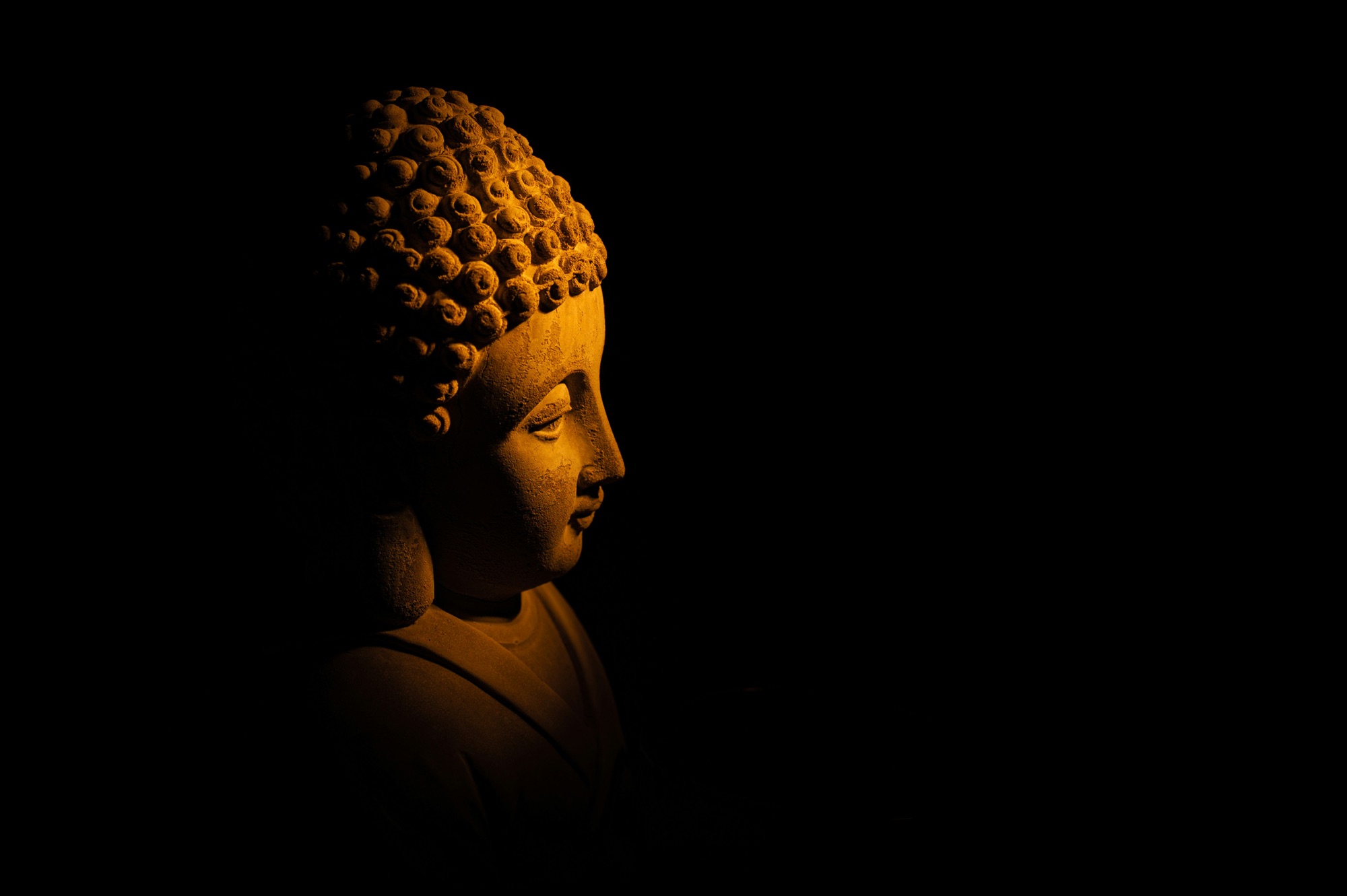
In the rich tapestry of global religions, two prominent figures stand out for their profound impact on millions: Buddha and Allah. These figures anchor the spiritual and philosophical frameworks of Buddhism and Islam, respectively. Despite the common goal of guiding adherents toward a meaningful existence, the principles and teachings associated with Buddha and Allah diverge significantly, reflecting the unique historical, cultural, and theological contexts from which they emerged. This comprehensive analysis explores the origins, doctrines, and practices associated with Buddha and Allah, aiming to illuminate the distinct paths they chart in the quest for spiritual fulfillment.
Buddha
Buddhism’s roots trace back to the 6th century BCE in India, where Siddhartha Gautama, later known as Buddha, embarked on a profound journey of self-discovery and enlightenment. Rejecting the materialistic and ritualistic practices of his time, Buddha focused on the intrinsic nature of human suffering and the path to its cessation. His teachings, encapsulated in the Four Noble Truths and the Noble Eightfold Path, offer a meticulous framework for overcoming suffering through ethical living, mental discipline, and wisdom.
The Life of Siddhartha Gautama
The narrative of Buddha’s life, from his luxurious upbringing to his ascetic practices and eventual enlightenment under the Bodhi tree, provides a compelling backdrop to his teachings. Born into a royal family, Siddhartha was shielded from the harsh realities of life until his late twenties. After encountering suffering in various forms—old age, sickness, and death—he renounced his royal life to seek a solution to human suffering.
Siddhartha’s journey was not without challenges. He experimented with extreme asceticism, nearly starving himself in the process, but eventually realized that neither indulgence nor extreme self-denial led to enlightenment. This realization led to the development of the Middle Way, a balanced approach to spiritual practice.
Core Teachings of Buddhism
Buddhism emphasizes the transient nature of existence, advocating for detachment from material desires and an embrace of compassion, mindfulness, and meditation. The concept of Nirvana, representing the ultimate liberation from the cyclical nature of suffering and rebirth, underscores Buddhism’s soteriological goals.
- The Four Noble Truths: These form the foundation of Buddhist thought:
- The Truth of Suffering (Dukkha): Life inherently involves suffering or dissatisfaction.
- The Truth of the Cause of Suffering (Samudaya): Suffering is caused by craving and desire.
- The Truth of the End of Suffering (Nirodha): Ending craving leads to the cessation of suffering.
- The Truth of the Path (Magga): The Noble Eightfold Path offers a route to end suffering.
- The Noble Eightfold Path: This serves as a guideline for ethical and mental development with the goal of freeing an individual from attachments and delusions; it leads to understanding, liberation, and peace.
Practical Applications in Daily Life
Meditation is a cornerstone of Buddhist practice. For instance, Vipassana meditation, which focuses on the deep interconnection between mind and body through disciplined attention to physical sensations, is widely practiced. Mindfulness, or the art of being present, is another key practice that has gained popularity beyond Buddhist communities, often used in stress reduction and mental health therapies.
Buddhists are encouraged to cultivate virtues such as loving-kindness (Metta), compassion (Karuna), sympathetic joy (Mudita), and equanimity (Upekkha), which are collectively known as the Brahmaviharas, or the Four Immeasurables.
Allah
In contrast, Islam, established in the 7th century CE in the Arabian Peninsula, centers on the worship of Allah, a singular, omnipotent deity. Allah’s revelation to the Prophet Muhammad, encapsulated in the Quran, provides comprehensive guidance on every aspect of life, from moral conduct to worship, community relations, and personal development. Unlike Buddhism’s emphasis on self-guided enlightenment, Islam focuses on submission to the divine will as articulated through its scriptures and prophetic traditions.
The Role of the Prophet Muhammad
Muhammad is considered the last prophet in Islam, a messenger who conveyed Allah’s final revelation. Born in Mecca in 570 CE, he began receiving divine revelations at the age of 40, which continued for 23 years until his death. These revelations are compiled in the Quran, the holy book of Islam.
Muhammad’s life and sayings, recorded in Hadith collections, provide Muslims with a model for living a life aligned with Allah’s will. His leadership in establishing the early Muslim community in Medina serves as a powerful example of the integration of faith and community governance.
Core Teachings of Islam
The Five Pillars of Islam—faith, prayer, charity, fasting, and pilgrimage—form the foundation of Muslim life, emphasizing a balance between individual piety and communal responsibility.
- Shahada (Faith): The declaration of faith—”There is no god but Allah, and Muhammad is the messenger of Allah”—is the fundamental creed of Islam.
- Salah (Prayer): Muslims perform five daily prayers facing Mecca, which foster discipline, spirituality, and closeness to Allah.
- Zakat (Charity): Muslims are required to give a portion of their wealth to those in need, emphasizing social responsibility and the purification of wealth.
- Sawm (Fasting during Ramadan): This annual fast during the holy month of Ramadan fosters self-control, empathy for the less fortunate, and spiritual growth.
- Hajj (Pilgrimage to Mecca): Every Muslim who is physically and financially able must undertake the pilgrimage to Mecca at least once in their lifetime.
The Concept of Tawheed
The concept of Tawheed, or the oneness of Allah, permeates every aspect of Islamic theology and practice, affirming a direct, unmediated relationship between the believer and God. This monotheistic principle is central to the Islamic worldview, influencing not just religious practices but also ethics, law, and social structures.
Key Differences
Theological Foundations
While Buddha is viewed as a teacher and exemplar, Allah is revered as the sole, supreme creator. This fundamental distinction shapes the overarching goals and practices within Buddhism and Islam. Buddhism focuses on the individual’s inner journey toward enlightenment, whereas Islam emphasizes submission to a divine authority and adherence to prescribed religious duties.
Soteriology
Buddhism’s path to enlightenment is an individual journey of introspection and moral refinement, whereas Islam delineates a communal path of obedience to divine commandments. While Buddhists seek Nirvana, a state beyond suffering and rebirth, Muslims strive for Jannah, or paradise, achieved through faith and righteous deeds.
Cosmology
The Buddhist universe is an endless cycle of birth, death, and rebirth, with Nirvana as the escape from this cycle. Islam, however, presents a linear cosmology with a definitive beginning and end, culminating in the resurrection and judgment. This eschatological view is vividly portrayed in the Quran and Hadith, detailing the afterlife and the criteria for divine judgment.
Scriptural Authority
The Pali Canon and other Buddhist texts serve as records of Buddha’s teachings and the early monastic community’s interpretations. In Islam, the Quran stands as the unaltered word of God, supplemented by the Hadiths, which record the Prophet Muhammad’s sayings and deeds. The Quran’s role as the ultimate authority on all matters of faith and practice distinguishes it from the more interpretative and evolving nature of Buddhist scriptures.
Practical Observances
While Buddhism emphasizes meditation and ethical living as pathways to enlightenment, Islam mandates ritual prayers, fasting, and other acts of worship as expressions of devotion to Allah. The structured ritual of Salah contrasts with the more individualized practice of meditation in Buddhism, reflecting the communal focus of Islamic worship.
Common Misconceptions
On Buddhism
A frequent misconception is that Buddhism is atheistic. While it doesn’t posit a creator god, it acknowledges a vast pantheon of deities and supernatural beings that play various roles in the cosmological framework. However, these beings are also subject to the cycle of rebirth and are not worshipped as omnipotent entities.
On Islam
A common misunderstanding about Islam is that it is inherently rigid and intolerant. In reality, Islamic teachings emphasize compassion, justice, and respect for others, principles often overshadowed by cultural and political misinterpretations. The diversity within the Muslim world reflects a wide range of interpretations and practices.
Interfaith Dialogue and Understanding
Promoting a nuanced understanding of Buddhism and Islam can foster greater interfaith dialogue and mutual respect. Both traditions offer profound insights into the human experience and the quest for meaning, emphasizing compassion, ethics, and the pursuit of a higher purpose.
Practical Steps for Engagement
- Educational Initiatives: Encouraging educational programs that explore the teachings and practices of both Buddhism and Islam can help dispel myths and foster understanding.
- Interfaith Activities: Organizing interfaith events and dialogues provides platforms for shared learning and collaboration.
- Personal Exploration: Taking the time to explore both religions through reading, attending talks, or visiting places of worship can enhance personal understanding and empathy.
By examining the philosophical underpinnings and practical implications of Buddhism and Islam, we gain not only a deeper appreciation of these faiths but also a broader perspective on the spiritual quest that unites humanity in its diversity. As we delve into the complexities of these belief systems, we pave the way for a more inclusive and empathetic world where different paths to the divine are acknowledged and respected.