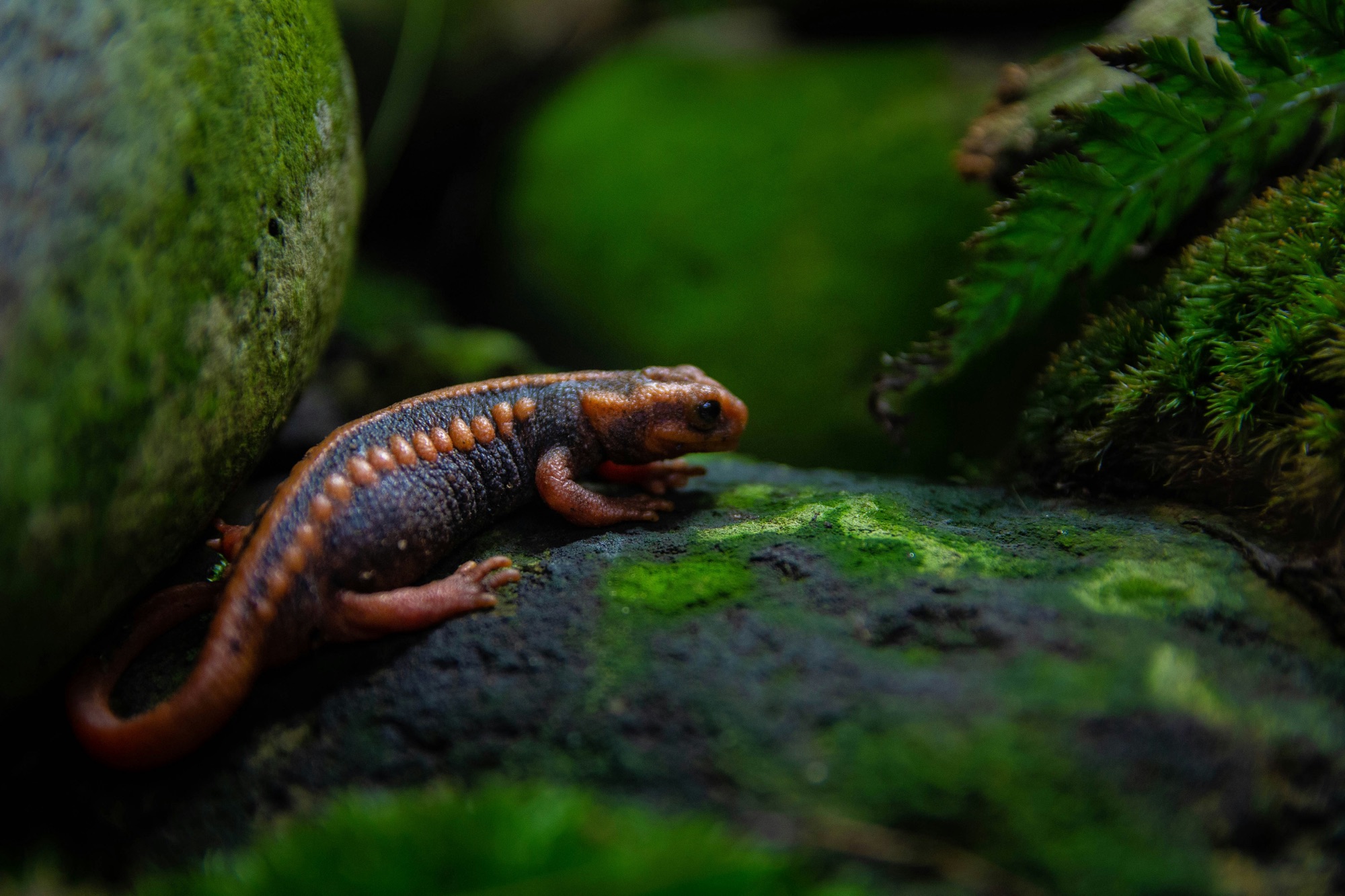
Salamanders are a group of amphibians typically characterized by a lizard-like appearance, with slender bodies, short noses, and long tails. They are distinct from lizards, which are reptiles, due to their smooth, moist skin and their life cycle, which often includes an aquatic larval stage. Salamanders are known for their ability to regenerate lost body parts, such as tails or limbs. They vary greatly in size, color, and habitat, living in a range of environments from damp forests to arid deserts. Most salamanders lay eggs in water, and their larvae are aquatic, breathing through gills before undergoing metamorphosis into their adult form, which may be aquatic, terrestrial, or both, depending on the species.
Understanding Salamander Regeneration
The Regenerative Abilities of Salamanders
When it comes to regenerating lost limbs, salamanders are true masters of the animal kingdom. Unlike humans, who have limited regenerative abilities, salamanders have the remarkable ability to regrow entire limbs, including bones, muscles, and nerves. This process, known as epimorphic regeneration, involves the formation of a blastema, a mass of undifferentiated cells that serves as the foundation for the new limb.
Salamanders owe their impressive regenerative powers to their ability to reprogram cells at the injury site, initiating a cascade of events that culminate in the regeneration of complex limb structures with astonishing precision. Their regenerative prowess has long captivated scientists, offering valuable insights into the mechanisms that govern tissue repair and regeneration.
Stages of Limb Regeneration
The limb regeneration process in salamanders occurs in several stages:
- Wound Healing and Blastema Formation: After a limb is lost, the wound quickly heals without scarring. A blastema forms at the site, composed of proliferating cells.
- Cellular Dedifferentiation: Mature cells at the injury site revert to a more primitive, stem cell-like state, enabling further proliferation and differentiation.
- Proliferation and Growth: The blastema cells multiply and start to take on specific roles, forming the necessary tissues for the new limb.
- Redifferentiation and Morphogenesis: Cells differentiate into specific tissues, such as muscle, bone, and nerves, and organize into a functional limb.
- Maturation: The new limb matures to fully integrate with the salamander’s body functions.
The Role of Stem Cells
Stem cells play a crucial role in salamander limb regeneration. These specialized cells have the unique ability to differentiate into various cell types, allowing them to rebuild the intricate structures of the limb. Salamanders are able to mobilize these stem cells to the site of injury, where they proliferate and differentiate to form the complex tissues necessary for limb regeneration.
The dynamic interplay between different types of stem cells, including multipotent and pluripotent cells, orchestrates the precise reconstruction of the lost limb, highlighting the sophisticated regenerative machinery at work in these fascinating amphibians.
Types of Stem Cells Involved
- Multipotent Stem Cells: These cells can develop into multiple, but not all, cell types necessary for limb regeneration.
- Pluripotent Stem Cells: With the ability to form any cell type, these cells are crucial for regenerating the diverse tissues in a new limb.
Regulation of the Regeneration Process
The regeneration process in salamanders is tightly controlled by a complex network of signaling pathways and genetic factors. Studies have shown that certain genes, such as the ‘Wnt’ and ‘FGF’ signaling pathways, play key roles in coordinating the cellular processes involved in limb regeneration.
Key Signaling Pathways and Genetic Factors
- Wnt Signaling Pathway: Crucial for the initial stages of regeneration, influencing cell division and proliferation.
- FGF Signaling Pathway: Important for the growth and differentiation of cells within the blastema.
- BMP and Notch Pathways: These pathways help regulate the patterning and differentiation of tissues.
The orchestrated activation and repression of various genes and signaling molecules regulate cell proliferation, migration, and differentiation during the regeneration process. Unraveling the intricate regulatory mechanisms that govern salamander limb regeneration holds significant promise for advancing regenerative medicine and enhancing our understanding of stem cell biology.
Environmental and External Influences
Salamander regeneration is also influenced by environmental factors, such as temperature and the presence of certain chemicals. For instance, regeneration rates can slow down in cooler temperatures, highlighting the importance of external conditions in the regenerative process.
Comparative Studies and Applications
Researchers have conducted comparative studies between salamanders and humans to uncover the molecular and cellular differences that underlie their divergent regenerative capabilities. By harnessing the insights gained from studying salamander regeneration, scientists hope to develop new strategies for enhancing human tissue regeneration and healing.
Human Regenerative Potential
Humans, unlike salamanders, have a limited capability to regenerate tissues. However, certain human tissues, like the liver and skin, do show some regenerative properties. By studying salamanders, researchers aim to unlock potential pathways that could be applied to humans.
Applications in Regenerative Medicine
The ultimate goal is to harness the regenerative power of salamanders to revolutionize the field of regenerative medicine and provide new treatments for patients with severe injuries or degenerative diseases. Integrating the discoveries from comparative regenerative studies may pave the way for innovative therapeutic approaches that leverage the innate regenerative potential of humans and other organisms to promote tissue repair and regeneration.
Potential Medical Applications
- Wound Healing: Understanding salamander regeneration can lead to improved treatments for non-healing wounds in humans.
- Limb Regrowth: While still theoretical, insights could potentially lead to methods for limb regrowth in humans.
- Organ Regeneration: Exploring how salamanders regenerate complex structures could aid in developing organ regeneration techniques.
Challenges and Ethical Considerations
While the potential applications are exciting, there are significant challenges and ethical considerations. The complexity of human biology compared to that of salamanders means that direct applications are not straightforward. Additionally, ethical concerns regarding genetic manipulation and stem cell use must be addressed.
Case Studies and Experiments
Historical Insights
The fascination with salamanders’ regenerative abilities dates back centuries. Early naturalists observed their limb regeneration and speculated on the underlying mechanisms. Modern science has provided tools to delve deeper into these processes.
Modern Experiments
Recent experiments have focused on the genetic and cellular dynamics during regeneration. For example, researchers have used CRISPR technology to manipulate genes in salamanders, providing insights into which genes are critical for regeneration.
Lessons from Nature
Observing salamanders in their natural habitat has offered additional insights. For instance, field studies have shown that environmental stressors like pollution can affect regeneration rates, emphasizing the importance of a healthy environment for regenerative processes.
Common Misconceptions and Mistakes
Misconceptions
- Regeneration Equals Immortality: While salamanders can regenerate limbs, they are not immortal and have a natural lifespan.
- All Amphibians Regenerate Like Salamanders: Not all amphibians share the same regenerative capabilities; salamanders are unique in this respect.
Mistakes in Research
- Overgeneralization: Assuming findings in salamanders can be directly applied to other species without considering biological differences.
- Ignoring Environmental Factors: Failing to consider the role of the environment can lead to incomplete understanding of the regeneration process.
Future Directions and Innovations
The future of regenerative research holds promise, with advances in biotechnology and a deeper understanding of genetic pathways. Research continues to explore the potential of applying salamander-like regeneration to medical treatments.
Emerging Technologies
- Gene Editing Tools: Technologies like CRISPR are being explored to manipulate and enhance regenerative pathways.
- Stem Cell Therapies: Developing robust stem cell therapies inspired by salamander regeneration.
Vision for the Future
The vision is a world where regenerative medicine has advanced to the point where severe injuries and degenerative diseases are managed through enhanced tissue regeneration, inspired by the natural abilities of salamanders.
In conclusion, salamanders offer a remarkable model for understanding regeneration. By studying these creatures, we gain valuable insights that could one day transform medical science and improve human health. The journey from observation to application is complex and challenging, but the potential rewards are worth the effort.