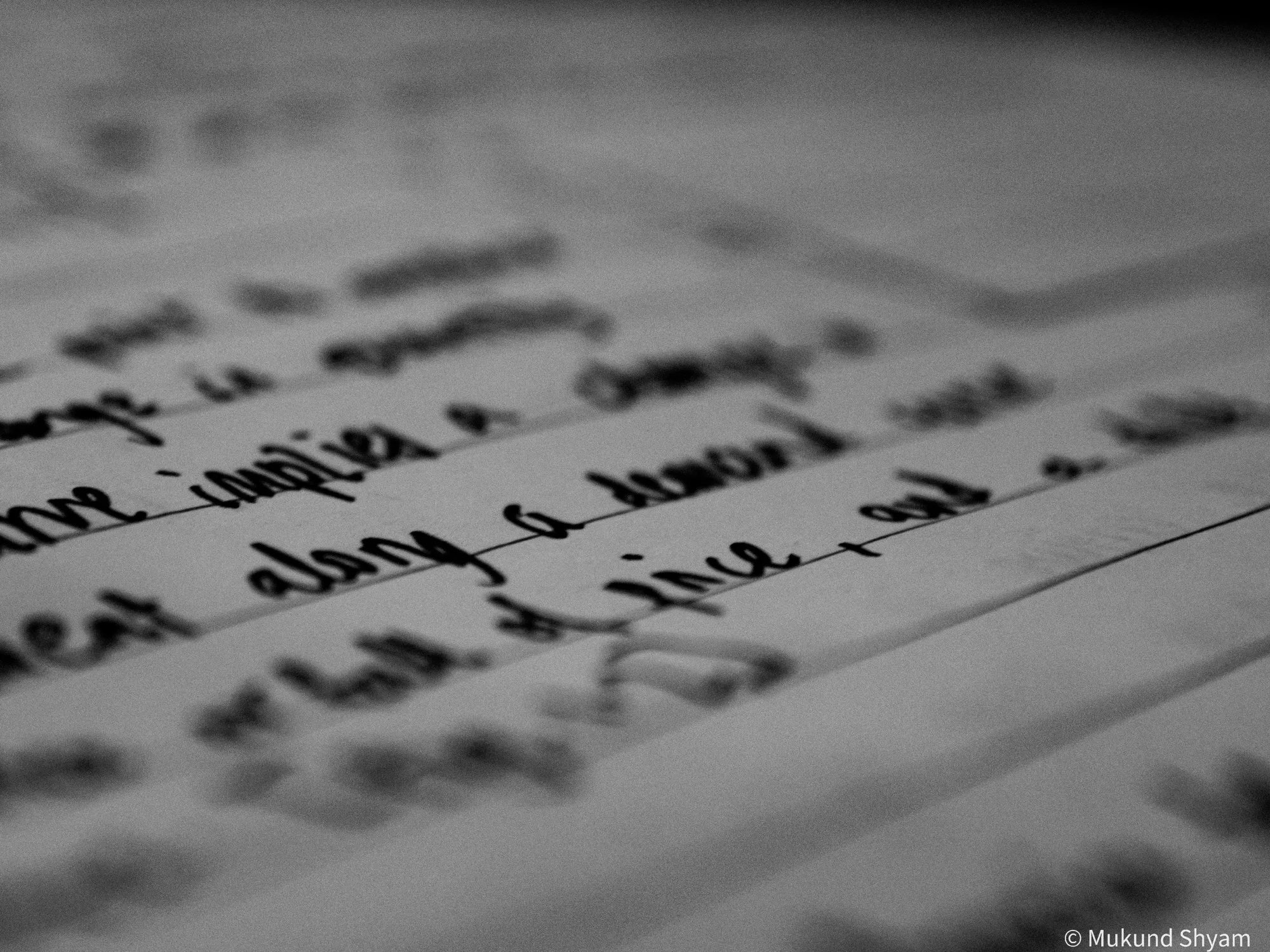
Think about the last time you wrote something by hand — a full letter, a journal entry, maybe even just a page of notes. For many, it’s been weeks, months, or even years. In an age dominated by screens, keyboards, and voice-to-text apps, the once-basic act of handwriting is quietly disappearing.
The shift has happened so subtly that most of us haven’t noticed. But slowly, undeniably, pen and paper are being replaced by tap and type. Children learn to swipe before they learn to grip a pencil. Schools teach keyboarding before cursive. Digital communication is fast, clean, efficient — but what are we losing when we stop writing by hand?
As it turns out, quite a lot.
The Slow Fade of Pen and Paper
For centuries, handwriting was central to communication. From ancient scrolls and royal decrees to personal diaries and handwritten love letters, the written word was not only a way to convey ideas but a direct imprint of personality and thought.
But the arrival of the digital revolution changed everything.
In the late 20th century, computers began replacing typewriters. Email overtook handwritten letters. Text messages replaced notes passed in class. Now, even digital signatures can be typed or auto-generated.
Schools followed suit. In many education systems around the world, cursive writing is no longer required. Some students now reach adulthood without ever having written a full page by hand. And while that might seem like progress, studies suggest it may have unintended consequences.
The Brain on Handwriting
Handwriting isn’t just a motor skill — it’s a cognitive one. When we write by hand, the brain engages in a rich process that involves memory, coordination, and language centers simultaneously.
Numerous studies have shown that handwriting activates more parts of the brain than typing does. Children who learn to write by hand develop better reading skills and stronger comprehension. Adults retain more information when they take handwritten notes compared to typing them.
Why? Because handwriting forces you to slow down. It engages your mind in filtering, organizing, and paraphrasing information in real time. Typing often becomes a mindless transcription — but writing makes you think.
In fact, one study published in Psychological Science found that students who took notes by hand scored significantly higher on conceptual questions than those who typed. The handwritten group had to process and reframe ideas, while the typing group could simply copy verbatim.
So when we remove handwriting from classrooms, we’re not just replacing one skill with another. We’re changing how kids learn.
Personal Expression Through Pen Strokes
Handwriting is more than a way to record thoughts. It’s a form of identity.
No two people have the same handwriting. Your loops, angles, spacing — they’re as unique as your fingerprints. In an age of mass-produced fonts and emoji reactions, handwriting is one of the last personal touches we have left.
Handwritten letters, journal entries, and marginal notes in books carry an emotional weight that typed text can’t replicate. They show effort, personality, and presence. A love letter in cursive has a warmth that a typed message lacks. A condolence card written by hand feels more sincere. Even messy grocery lists on the fridge remind us of the human hand behind them.
When we lose the habit of handwriting, we lose a part of our tactile connection to language, and in some ways, to each other.
The Costs of Losing Cursive
While cursive handwriting may seem antiquated, it served an important function: it linked letters in a continuous flow, making writing faster and more fluid. Cursive also played a role in historical literacy — many foundational documents, like the U.S. Constitution or personal letters from wartime, are written in cursive. Without the ability to read it, younger generations may find entire chapters of history illegible.
But beyond the practical, cursive has a neurological benefit as well. Some research suggests that writing in cursive helps children with dyslexia by reinforcing motor patterns and letter formation in a more natural way. It also encourages fine motor control, something increasingly rare in a touch-screen world.
With cursive being phased out, we risk creating a generation that’s not only disconnected from their cultural past but also less neurologically stimulated in early learning years.
Digital Tools: Help or Hindrance?
It’s not all doom and gloom, of course. Digital tools offer speed, convenience, and accessibility. Spell checkers help people with learning disabilities. Typing opens doors to rapid communication and global interaction. Apps like Notion, Evernote, and Obsidian provide powerful ways to organize knowledge.
But there’s a catch: ease often replaces effort. And effort is where the magic of deep learning lives.
For example, voice-to-text is undeniably useful — but speaking your thoughts doesn’t engage the same parts of the brain as writing them. Ideas formed through your fingers take on a different structure and weight.
Even stylus-based digital note-taking, while closer to handwriting, doesn’t fully replicate the physicality of real pen and paper. The subtle resistance of paper, the smudge of ink, the sound of graphite — these sensory cues anchor memory in ways that glass screens can’t.
The Rise of Calligraphy and the Analog Comeback
Interestingly, as handwriting fades in practical settings, it’s being revived in artistic and nostalgic spaces. Calligraphy, bullet journaling, and hand lettering are booming hobbies on platforms like Instagram and TikTok.
These trends suggest something deeper than just aesthetic appeal. They reveal a longing for the slow, intentional, and personal. In a world of infinite scrolling, handwriting offers grounding. It reminds us that creation doesn’t have to be instant to be valuable.
Journaling is back. So are fountain pens. Some therapists now recommend handwriting as a mindfulness tool, helping patients slow down, reflect, and reconnect with their emotions.
It turns out that the very things handwriting offers — deliberation, depth, authenticity — are exactly what our fast-paced lives are missing.
What We’re Really Losing
The decline of handwriting isn’t just about communication. It’s about how we think, feel, and connect.
When we type everything, we often lose the nuance of physical engagement. We lose patience. We lose the physical link between the brain and the hand. We lose vulnerability — because typing is easy to edit, but handwriting exposes raw thought.
And perhaps most importantly, we lose permanence. Digital files can be deleted, corrupted, or lost in the cloud. But a handwritten letter, a journal entry, a note in the margin of a book — those endure. They age, they wrinkle, they bear the marks of time. They become artifacts, both personal and historical.
Future generations may not find your Facebook posts, but they might find your journal.
Can We Save Handwriting?
Saving handwriting doesn’t mean abandoning technology. It means preserving balance. Here are a few simple ways to keep it alive:
- Encourage kids to write letters, thank-you notes, or keep journals
- Take handwritten notes during meetings or lectures
- Start a morning journaling habit — even just a paragraph a day
- Write your grocery lists by hand
- Learn calligraphy or cursive as a meditative practice
These aren’t grand gestures. But they matter. Because in keeping handwriting alive, we keep part of ourselves alive — the slow, thoughtful, deeply human part that’s too often buried under convenience.
Conclusion
We live in a world where speed rules. Where the next message is already being typed before the current one is finished. Where thoughts are reduced to tweets and emotions to emojis.
And yet, in the quiet scratch of a pen on paper, something timeless remains.
Handwriting is not just about words. It’s about presence, memory, emotion, and meaning. It’s about putting a piece of yourself into what you say.
Maybe that’s what we’re really losing in a digital world — not just handwriting, but the humanity behind it.
And maybe it’s time we write that story… by hand.