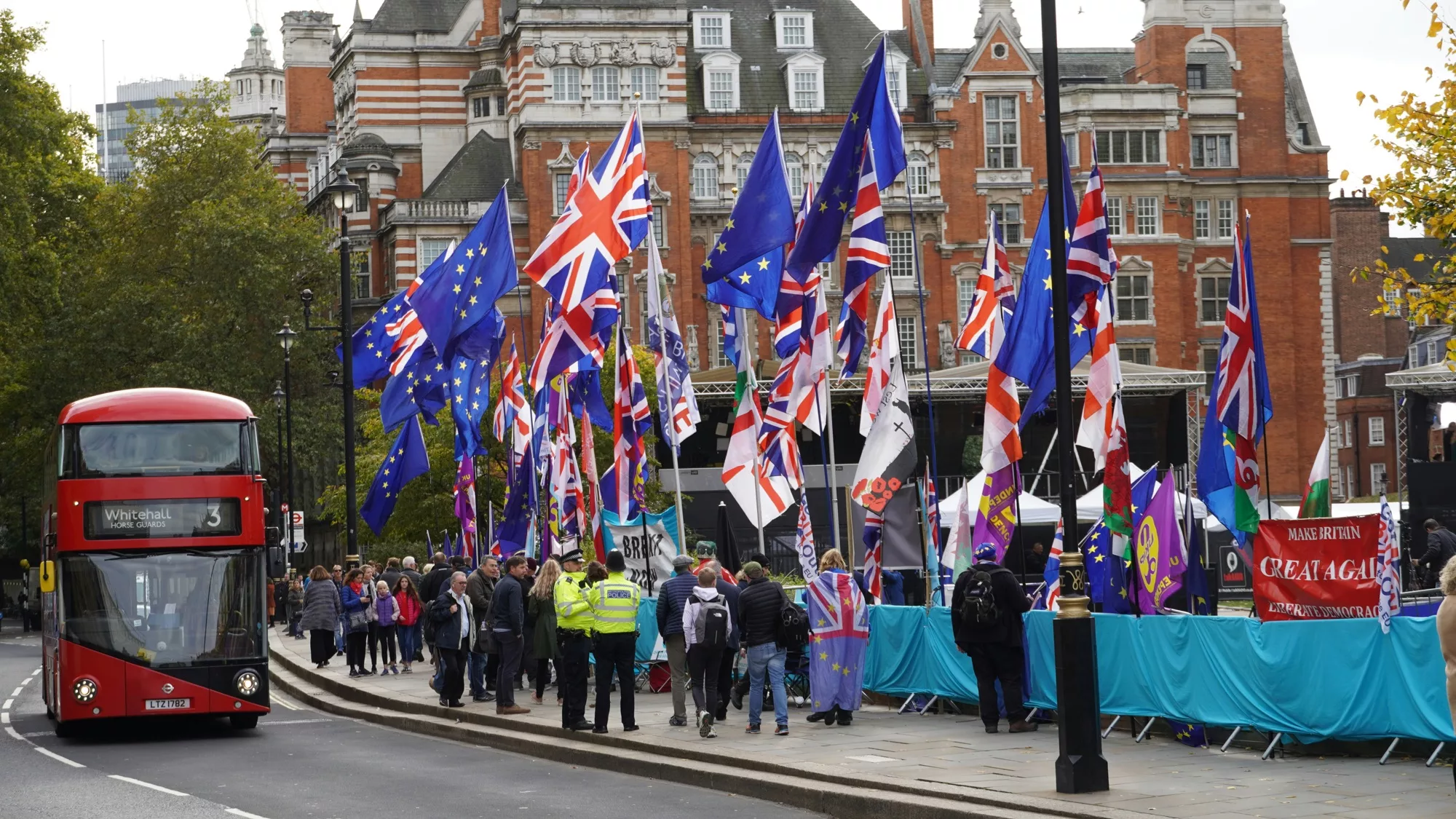
On June 23, 2016, the United Kingdom voted in a referendum that would alter its destiny and shake the foundations of European politics. By a slim but decisive margin—52% to 48%—Britons chose to leave the European Union, ending a membership that had lasted more than four decades. The shock reverberated across Europe and the world. Financial markets tumbled. Political careers collapsed. And a single word, Brexit, became shorthand for one of the most consequential political gambles in modern history.
Supporters framed it as a rebirth of sovereignty, the reclaiming of borders, laws, and national pride. Opponents warned it would be an act of self-sabotage, undermining trade, influence, and stability. Now, several years later, the dust has settled enough to take a retrospective look. The pressing question is no longer “Will Brexit happen?” but “Was Brexit a failure?” The answer depends on whether one measures by economics, politics, identity, or the elusive promise of control.
Britain and Europe: A Troubled Relationship Before Brexit
To understand Brexit, one must remember that Britain’s relationship with Europe was always uneasy. Unlike founding EU members such as France or Germany, the UK joined relatively late, in 1973, largely for economic reasons. Even then, the decision was controversial, with a referendum held just two years later in 1975 to confirm membership. Britain kept its own currency, the pound sterling, and never joined the Schengen Area of free movement.
From the beginning, Britain was the EU’s “awkward partner.” Governments from Margaret Thatcher to David Cameron often clashed with Brussels over regulations, budget contributions, and sovereignty. Thatcher famously demanded, “I want my money back,” securing a rebate on the UK’s EU payments in 1984. Euroscepticism simmered for decades, particularly within the Conservative Party, until Cameron’s decision to hold the 2016 referendum unleashed forces that would change Britain forever.
The Promises of Brexit
Brexit’s advocates painted a vision of freedom, prosperity, and control. Among the promises were:
- Restored sovereignty: No more EU laws imposed from Brussels. The UK Parliament would be fully sovereign again.
- Control of borders and immigration: Leaving meant ending free movement of people, allowing Britain to decide who entered.
- Financial savings: The infamous red bus claimed, “We send the EU £350 million a week. Let’s fund our NHS instead.”
- Trade independence: Britain could sign deals with global powers without being tied to EU policy.
- Revival of industries: Especially fishing and farming, sectors seen as betrayed by EU quotas and regulations.
These promises were simple and emotionally powerful. But did they survive the collision with reality?
Political Fallout: Prime Ministers and Polarization
David Cameron’s Gamble and Resignation
Prime Minister David Cameron never intended for Britain to leave. He called the referendum to silence Eurosceptics in his own party and believed the Remain campaign would win easily. When the result went the other way, he resigned within hours, his career destroyed by a gamble that reshaped Britain.
Theresa May and the Impossible Task
Theresa May inherited the impossible job of delivering Brexit in a way that satisfied both hardline Leavers and cautious Remainers. For three years she struggled to pass a withdrawal deal through Parliament, facing repeated humiliations. Her phrase, “Brexit means Brexit,” became a symbol of ambiguity. Ultimately, her resignation reflected the deep divisions tearing her party apart.
Boris Johnson: “Get Brexit Done”
Boris Johnson, one of Brexit’s most flamboyant champions, swept into power in 2019 with the simple, resonant slogan: “Get Brexit Done.” His charismatic campaigning delivered a landslide Conservative majority, breaking Labour’s “Red Wall” in the north of England. In January 2020, Johnson fulfilled his promise by formally taking Britain out of the EU. Yet his triumph proved short-lived. His premiership collapsed under scandals like “Partygate,” leaving Brexit’s legacy tarnished.
Endless Divisions
Since 2016, Britain has seen five prime ministers in seven years. Political instability has been one of Brexit’s clearest consequences, reflecting not unity but polarization. The referendum split the nation: young vs. old, urban vs. rural, England vs. Scotland, London vs. the provinces. Far from “healing” Britain, Brexit deepened its fractures.
The Economic Reckoning
GDP and Trade Losses
Brexit’s economic toll is now measurable. The Office for Budget Responsibility (OBR) estimates that Brexit has permanently reduced UK GDP by about 4–5% compared to if it had stayed in the EU. Exports to the EU fell as customs checks, tariffs on some goods, and regulatory barriers slowed trade.
Small businesses were especially hard hit. Many who once shipped easily to France or Germany now face mountains of paperwork. Some gave up entirely, while others moved operations into the EU.
While Britain has signed trade deals with Australia, New Zealand, Japan, and joined the CPTPP, critics argue these deals are minor compared to the loss of frictionless access to the EU—the world’s second-largest economy.
Inflation and Cost of Living
Brexit coincided with the COVID-19 pandemic and Russia’s invasion of Ukraine, making cause-and-effect hard to parse. Yet economists agree Brexit added to the UK’s inflation problem. Food prices rose as supply chains faced border delays. Farmers and fisheries struggled with labor shortages. In supermarkets, shortages of fresh produce became a visible symbol of Brexit’s disruptions.
The City of London
The City of London, long Europe’s financial capital, faced fears of exodus. While London remains a global hub, some banks and firms have relocated parts of their operations to Paris, Frankfurt, Amsterdam, and Dublin. Billions in trading volume shifted to EU markets. London retains influence, but Brexit eroded its dominance.
The Immigration Paradox
Immigration was one of the most emotional drivers of Brexit. Leavers argued that EU free movement had overwhelmed communities with low-wage workers, straining housing and services. By leaving, Britain would “take back control.”
After Brexit, EU immigration did fall sharply. But paradoxically, overall immigration increased. To fill shortages in agriculture, health care, and logistics, Britain turned to workers from Africa, Asia, and the Middle East. By 2022, net migration reached record highs, frustrating voters who expected drastic reductions.
Sectors that once relied on EU labor, like farming and hospitality, were hit by shortages, undermining the economic case for reduced immigration.
The Northern Ireland Dilemma
Perhaps no issue revealed Brexit’s contradictions more than Northern Ireland. The 1998 Good Friday Agreement ended decades of sectarian violence by removing the hard border between Northern Ireland and the Republic of Ireland. But Brexit reintroduced the problem: how to leave the EU while keeping that border invisible?
The solution was the Northern Ireland Protocol, which effectively kept Northern Ireland aligned with EU trade rules. This avoided a hard border on the island but created a de facto border in the Irish Sea between Northern Ireland and the rest of the UK.
Unionists in Northern Ireland saw this as betrayal. It triggered political paralysis, with the Democratic Unionist Party (DUP) refusing to govern until the protocol was renegotiated. Johnson’s promise of an “oven-ready deal” turned into years of disputes, with the EU and UK haggling over customs checks and sovereignty.
The Northern Ireland issue alone shows how Brexit’s simplicity collided with the complexity of real borders, treaties, and identities.
The Case Studies: Broken Promises and Partial Wins
The NHS and the £350 Million Bus
The claim that Brexit would free £350 million a week for the NHS remains one of the most infamous political promises in British history. In reality, Brexit’s economic slowdown reduced government revenue, while the NHS faces unprecedented strain from staff shortages, rising demand, and post-pandemic pressures. No visible Brexit dividend materialized.
The Fishing Industry
Brexit was sold to many coastal communities as a chance to “take back control” of British waters. In practice, the fishing industry faced new export barriers to the EU—its largest market. Delays, inspections, and paperwork left fish rotting before reaching customers. Fishermen who voted for Brexit often voiced disappointment at how little their situation improved.
Farming and Food
British farmers faced labor shortages after EU seasonal workers left, leading to crops rotting in fields. The government struggled to design visa schemes that matched the agricultural cycle. For many in rural communities, Brexit’s promises turned sour.
The Vaccine Success Story
Supporters point to one clear success: Britain’s rapid approval of COVID-19 vaccines in late 2020, ahead of the EU. They argue this was proof of regulatory freedom. Critics note the UK could have done the same as an EU member, but the symbolism of “vaccine sovereignty” bolstered Brexit’s defenders.
Sovereignty: Symbol or Substance?
Brexit undeniably restored formal sovereignty. The UK is no longer bound by EU laws, nor represented in EU institutions. Parliament is supreme again.
But sovereignty has proven more symbolic than transformative. To trade with the EU, Britain must still comply with many of its regulations. The Northern Ireland Protocol left part of the UK bound by EU law. And global trade deals often require compromises that limit true independence.
In practice, Brexit showed that in an interconnected world, sovereignty is less about absolute control and more about negotiating influence. The UK gained autonomy but lost leverage.
Public Opinion and Regret
In the years since Brexit, opinion has shifted. Polls by YouGov and others suggest that by 2023, around 60% of Britons believed Brexit was a mistake. Many who voted Leave expressed regret, citing economic struggles and broken promises.
Among young people, support for rejoining the EU is even stronger, raising the possibility that future generations may push for closer ties. Scotland, which voted overwhelmingly to remain, continues to see Brexit as fuel for independence arguments.
Was Brexit a Failure?
The answer depends on perspective.
- Economically: The evidence points to losses. Lower GDP, reduced trade, higher costs of living, and industries struggling with labor and export barriers suggest Brexit has been an economic setback.
- Politically: Brexit destabilized governments, toppled leaders, and deepened polarization. It did not “settle” the EU question but opened new fractures, particularly in Scotland and Northern Ireland.
- Culturally: For some, Brexit restored pride in sovereignty. For others, it eroded Britain’s reputation as a pragmatic and stable nation.
- Symbolically: It succeeded in reclaiming the principle of independence, but at the cost of practical influence.
Conclusion: An Unfinished Experiment
So, was Brexit a failure? In the short and medium term, the evidence leans toward yes. The NHS is not better funded, the economy is smaller, immigration remains high, and political instability has deepened. The grand promises of 2016 appear hollow.
Yet some argue that Brexit must be judged over decades, not years. Sovereignty and independence may yield long-term benefits not yet visible. Britain may adapt, forge new trade networks, and redefine its global role.
For now, Brexit remains an unfinished experiment—a dramatic assertion of national will whose consequences are still unfolding. What is certain is that Brexit reshaped Britain’s destiny, not only in economics and politics, but in the very way the nation understands itself.